Critical Squawk
A provider's own photo appeared under a different provider's name
What we found: On certain browsers, one provider's photo renders directly above a different provider's name and credentials on a client's About page, while the first provider's own bio runs further down the page with no photo at all.
What a prospect saw: Someone checking who they'd actually be seeing before booking found a mismatched face and name, then had to scroll past it to find the correct, unphotographed bio.
Why it mattered: About pages are where prospects verify a provider's identity and credentials before committing. In a high-trust personal service, a mismatch there can make the business look careless or misleading before a visitor ever reaches the point of booking.
First fix: Match each photo to the correct name and credentials, and give the misattributed provider her own portrait.
Fuel Burn Squawk
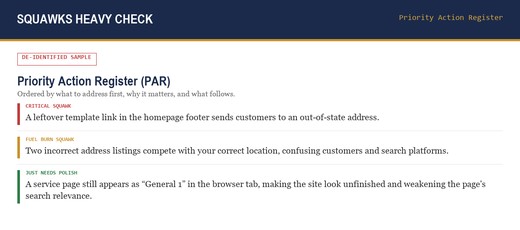
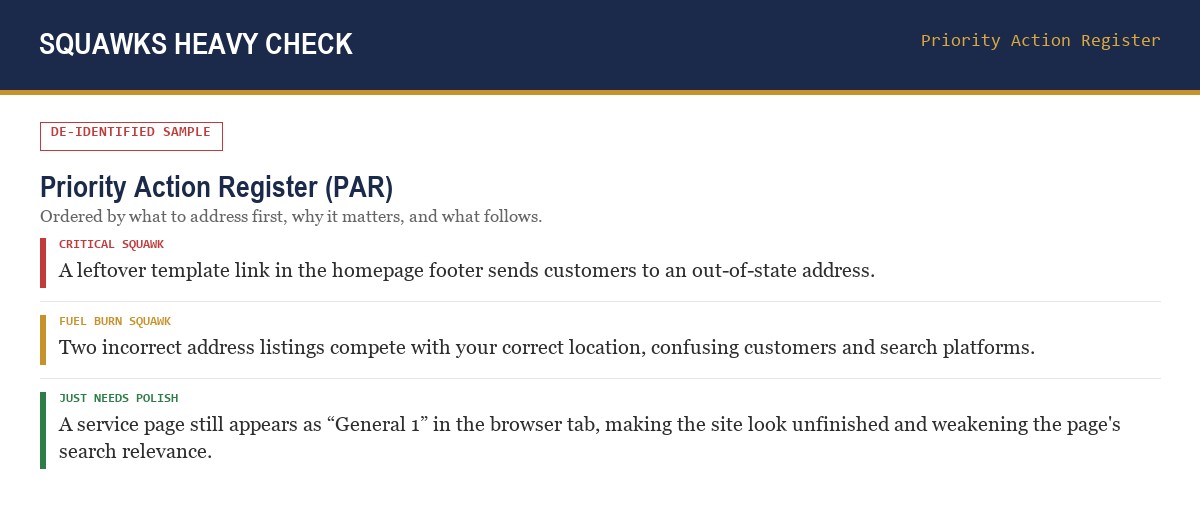
Two Wrong Addresses Compete With the Correct One
What we found: The business operates from one location, but two outdated addresses remain public across its booking platform and a legacy directory listing, alongside the one correct address on its own website.
What a prospect saw: Someone searching “near me” or checking directions could be pointed at the wrong building, or see conflicting location details across the first few search results.
Why it mattered: Incorrect map or address links can mislead customers, create doubt, or cause a ready-to-book prospect to abandon the booking path. The same conflicts can weaken local search confidence and make it harder for search platforms to determine which location is authoritative, without any guarantee of a specific ranking effect.
First fix: Standardize the name, address, and phone number across the website, booking platform, and every directory listing, then request re-verification where needed.
Fuel Burn Squawk
The page B2B buyers check before requesting a bid was broken
What we found: A specialty B2B contractor's own About page had been returning a broken-page error for an extended period.
What a prospect saw: Someone trying to verify who they'd be hiring before requesting a bid hit a dead end instead of a credibility page.
Why it mattered: The pathway made it harder for exactly the buyers who do the most diligence before a large purchase. A broken trust page at that moment is enough to send a cautious buyer looking at a competitor instead.
First fix: Restore the About page and confirm it renders correctly from every internal and external link pointing to it.
Critical Squawk
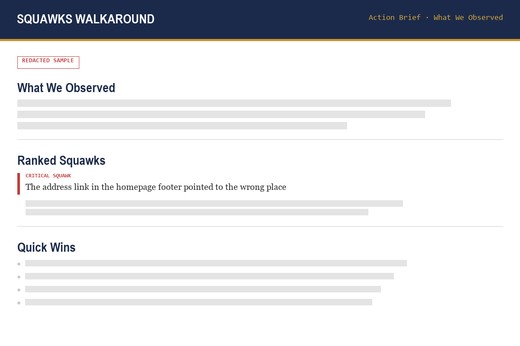
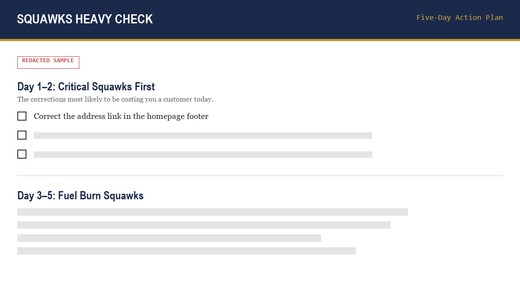
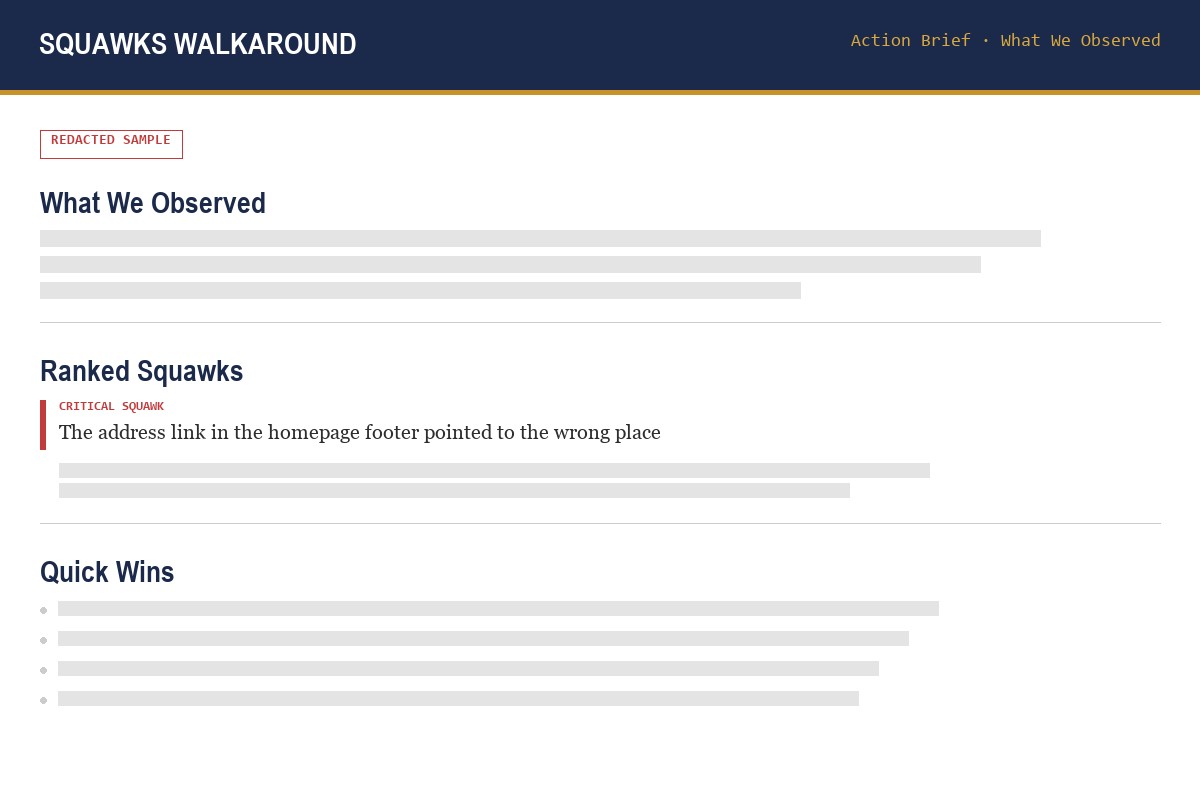
A Leftover Template Link Sent Customers Out of State
What we found: A client's homepage footer still carried a leftover template link from the site's original build, including a map link pointing to an out-of-state address, carried on every page of the site.
What a prospect saw: Someone who had already decided to engage and clicked the footer address for directions would be sent to a location unrelated to the business's actual market.
Why it mattered: Accurate location information helps customers find the business during local discovery and directs them to the correct destination once they enter the conversion pathway. Incorrect map or address links can mislead customers, create doubt, or cause a ready-to-book prospect to abandon the booking path.
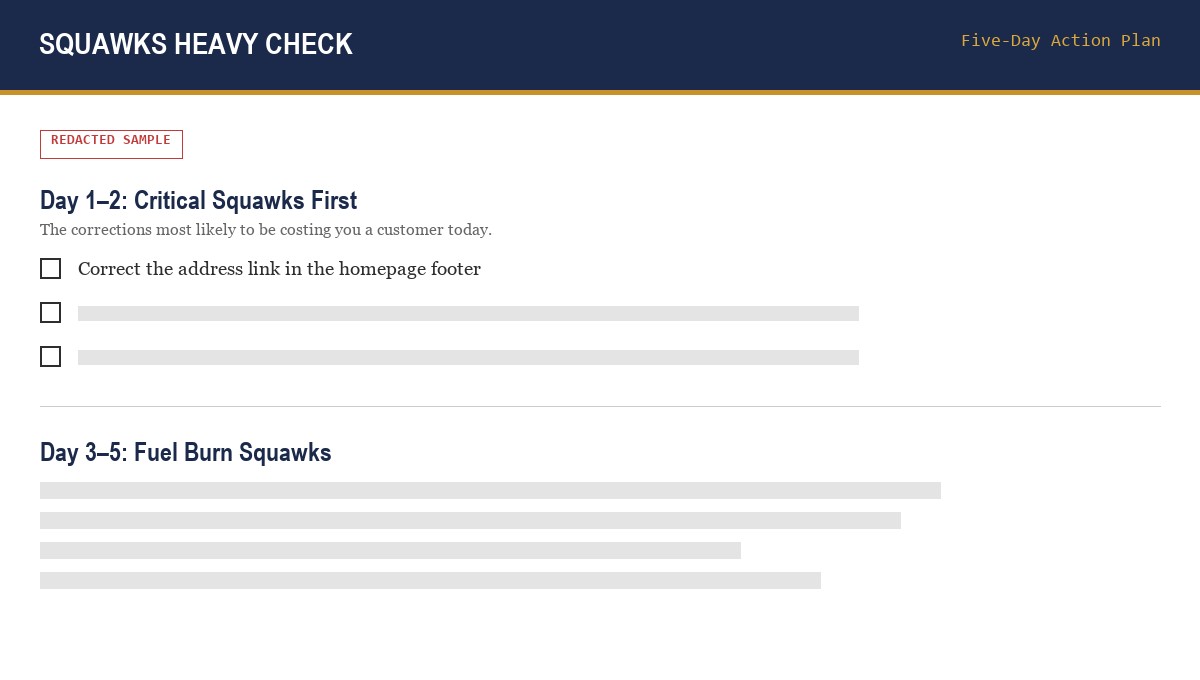
First fix: Remove the leftover template link in the homepage footer, then confirm it matches the current, correct location.
Just Needs Polish Squawk
A service page's browser tab still said “General 1”
What we found: A service page still appears as “General 1” in the browser tab and in search results, carrying its website builder's placeholder title instead of the service name.
What a prospect saw: Someone searching for that specific service by name saw a generic, unbranded result instead of a listing that matched what they typed.
Why it mattered: That generic label makes the site look unfinished and gives customers and search platforms less context about the page. The page worked fine once a visitor was already on it, but the placeholder title weakened search relevance and professional presentation for anyone finding it through search.
First fix: Replace the placeholder title tag with the actual service name and a short, specific description.
Just Needs Polish Squawk
Every photo was still named by the camera, not the service
What we found: Every photo on a client's website used unedited camera-default filenames, like a string of digits instead of a description.
What a prospect saw: Someone browsing image search for the services shown never saw those photos, because nothing about the filename told search engines what was in them.
Why it mattered: A small technical detail, but it quietly suppressed a free source of visibility: people who discover a business through image search before they ever visit the website.
First fix: Rename image files to describe the service and location shown, and add matching alt text.
These are de-identified examples from real SQUAWKS inspections, not composites. Client names, brands, and identifying details have been removed or generalized; the underlying finding is real. Every finding in your own inspection is verified against your business specifically and evidenced. SQUAWKS attempts to model an opportunity estimate for every finding, using company-specific information or conservative industry assumptions where defensible; some findings cannot responsibly be reduced to a dollar figure, but they are still prioritized and included in the corrective sequence. Outcomes always depend on implementation, market conditions, and your own decisions. No inspector can guarantee revenue results.